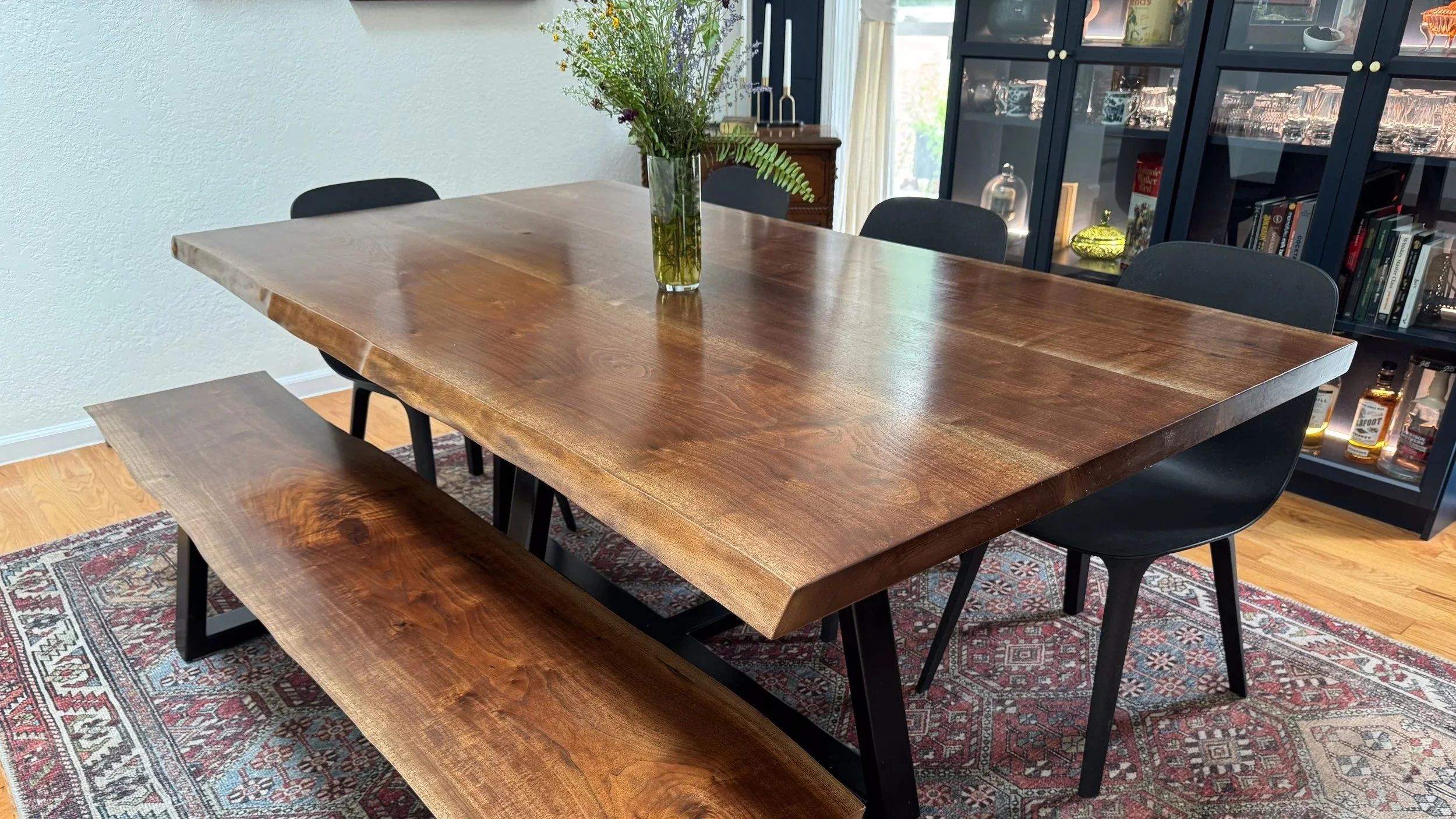
Every Vault Woodworks creation begins with carefully selected solid hardwood and is built using traditional joinery designed to last for generations.
“I believe exceptional furniture begins with exceptional materials. That’s why every Vault Woodworks piece starts with carefully selected solid hardwoods, genuine vegetable-tanned leather, and finishes chosen to preserve, not hide the natural beauty of the wood. These materials aren’t selected simply because they’re beautiful today, they’re chosen because they’ll become even more beautiful after years of everyday living.”
The Vault Material Philosophy.
I believe the best furniture doesn't simply survive the passage of time it becomes more beautiful because of it.
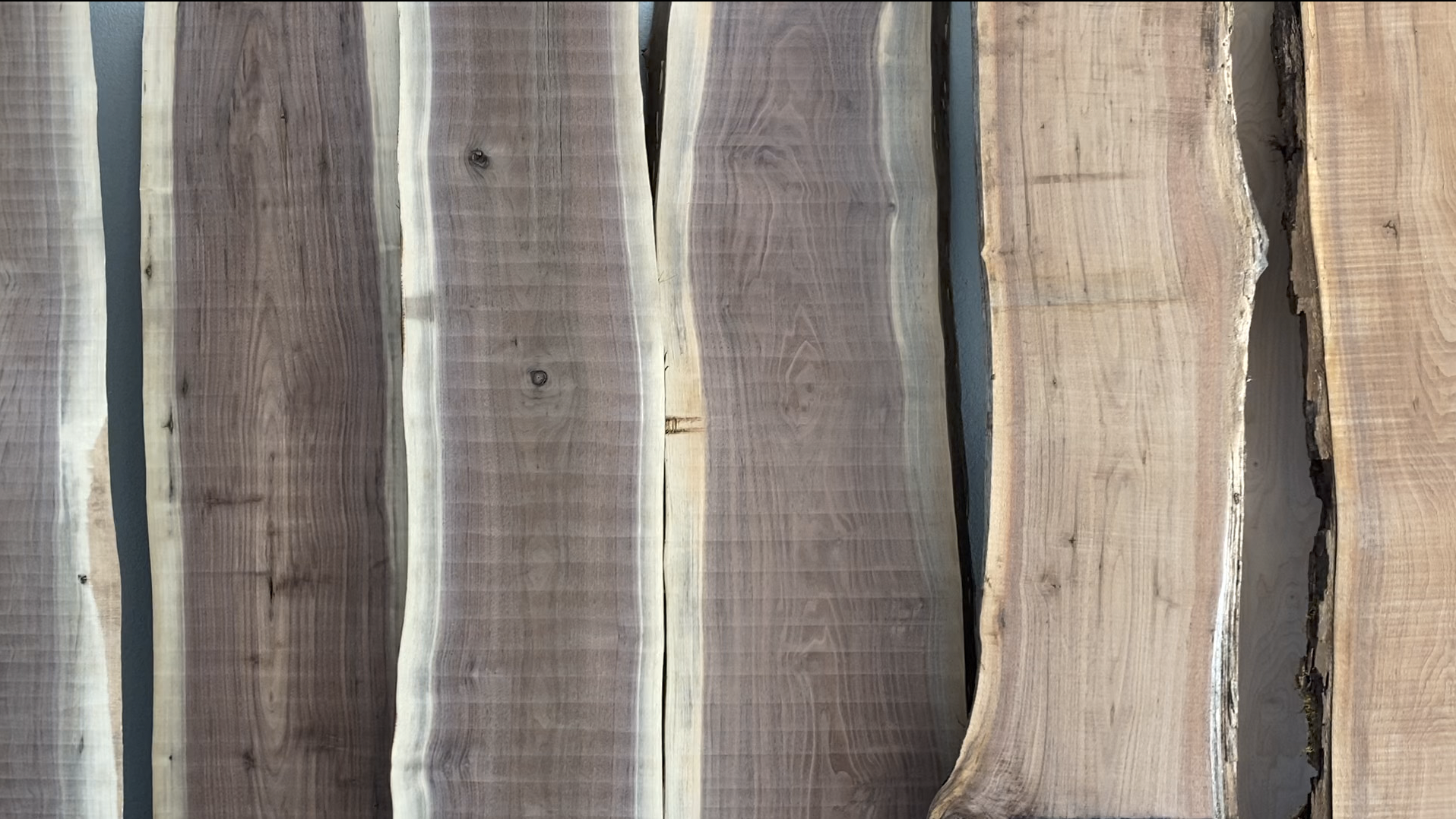
When I walk into a hardwood lumber yard, I'm looking for the board that has something to say. Sometimes that's a bold medullary rays (flakes) of grain in White Oak. Sometimes it's the shimmer or 3D effect of curly Maple catching the light. Other times it's the rich color variation in a piece of Walnut that could only have come from that particular tree.
I've gone through three or four boards to find the one that felt right for a project, knowing my customer would never know how much time I spent searching. Not because the others weren't good boards, but because they weren't the right boards. The right material has character. It invites you to stop, look a little closer, and appreciate the beauty that nature created long before I ever stepped into my shop.
Every material decision at Vault Woodworks is intentional.
That means choosing wood species not only for how they look today, but for how they'll look thirty years from now. Walnut softens and lightens over time. White Oak and Cherry deepen into rich patinas. Vegetable-tanned leather becomes softer, darker, and develops a character all its own from years of sunlight, use, and touch. These aren't imperfections to be avoided they're the marks of a life well lived.
I don't believe handcrafted furniture should look mass produced. If you placed three dining tables side by side in my shop, I would expect each one to tell a slightly different story. The grain patterns will vary. The colors will vary. The character will vary. That's the beauty of working with honest materials. Nature never makes the same board twice, and I have no desire to make every piece look exactly the same.
The same philosophy guides the finishes I choose. There isn't a single finish that's right for every piece of furniture. A dining table that hosts countless family dinners has different demands than a side table or a woven leather bench. Sometimes that means choosing a highly durable polyurethane, varnish or UV-cured finish designed to stand up to decades of daily use. Other times it means choosing a hardwax oil finish that preserves the natural feel of the wood and is more eco-friendly. The right finish is the one that best serves the way you'll live with your furniture.
Perhaps the most important thing I hope my customers understand is this: I don't want you to be afraid to use your furniture.
I don't build pieces that belong under glass or hidden away for special occasions. Your dining table should host Thanksgiving dinners, birthday celebrations, and late-night conversations. Your coffee table should bear witness to homework assignments, game nights, and quiet Sunday mornings. Your woven leather bench should develop a beautiful patina where generations of family members have sat while putting on their shoes before walking out the door.
Furniture should be lived with not preserved like a museum piece.
When I select materials, I'm not simply asking how they'll look when they leave my shop. I'm asking how they'll look after decades of use, sunlight, laughter, and stories. Will the finish still allow you to appreciate the beauty of the wood? Will the leather have developed a rich patina? Will the piece still feel as solid and inviting as the day it was delivered?
Those questions guide every decision I make.
At Vault Woodworks, I don't simply buy materials I curate them. I choose materials that age honestly, perform beautifully, and become more meaningful with every passing year.
Because the best furniture isn't furniture that looks untouched after fifty years. It's furniture that tells the story of the life that has been lived around it.
“Furniture should be lived with not preserved like a museum piece.”
The Vault Artisan Design Journey
Every piece of furniture we create begins with a conversation.
Before selecting a piece of lumber or choosing a finish, I want to understand the vision behind the piece. How do you imagine using it? Who will gather around it? What feeling do you want it to bring into your home? Is it a table where your family will share meals for years to come, a bench that welcomes guests through your entryway, or a piece designed to become part of your everyday routines?
The best furniture is not created in isolation. It is created by combining your vision with the natural beauty of carefully selected materials and the craftsmanship required to bring them together.
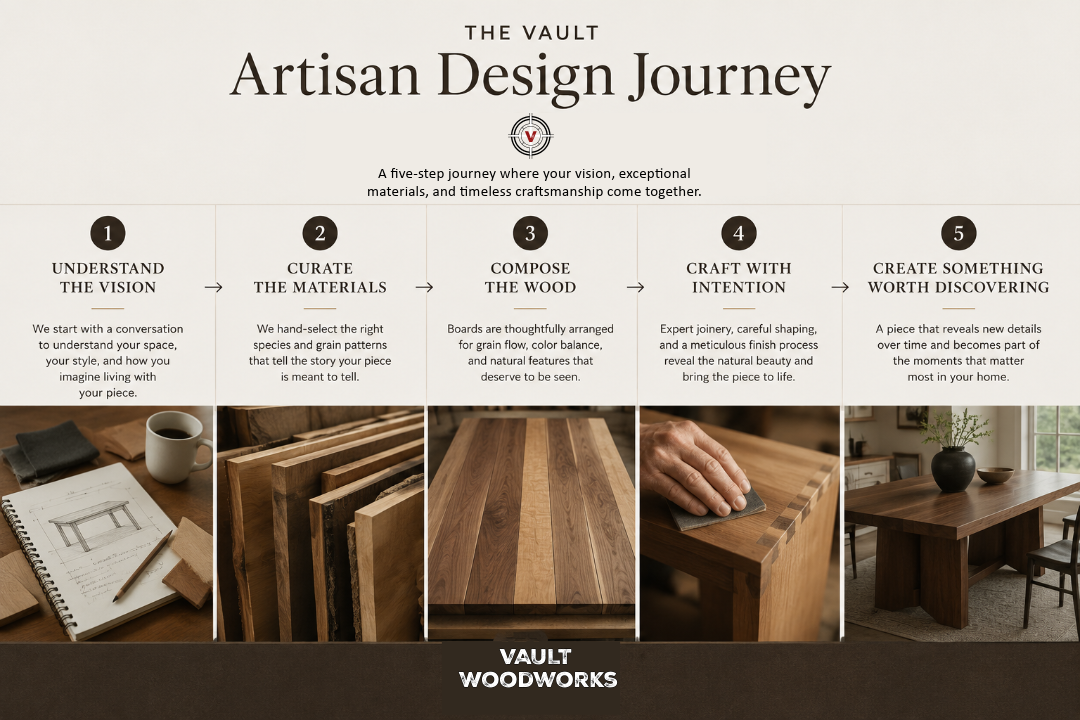
This is the journey every Vault Woodworks piece takes.
1. Understanding Your Vision
Every custom piece begins by understanding what you want the furniture to become.
Some customers arrive with a specific design in mind. Others know the feeling they want the piece to create but need help bringing that vision to life.
Together, we consider:
How the piece will be used.
The size and shape that best fits your space.
The style you want it to complement.
The details that make it uniquely yours.
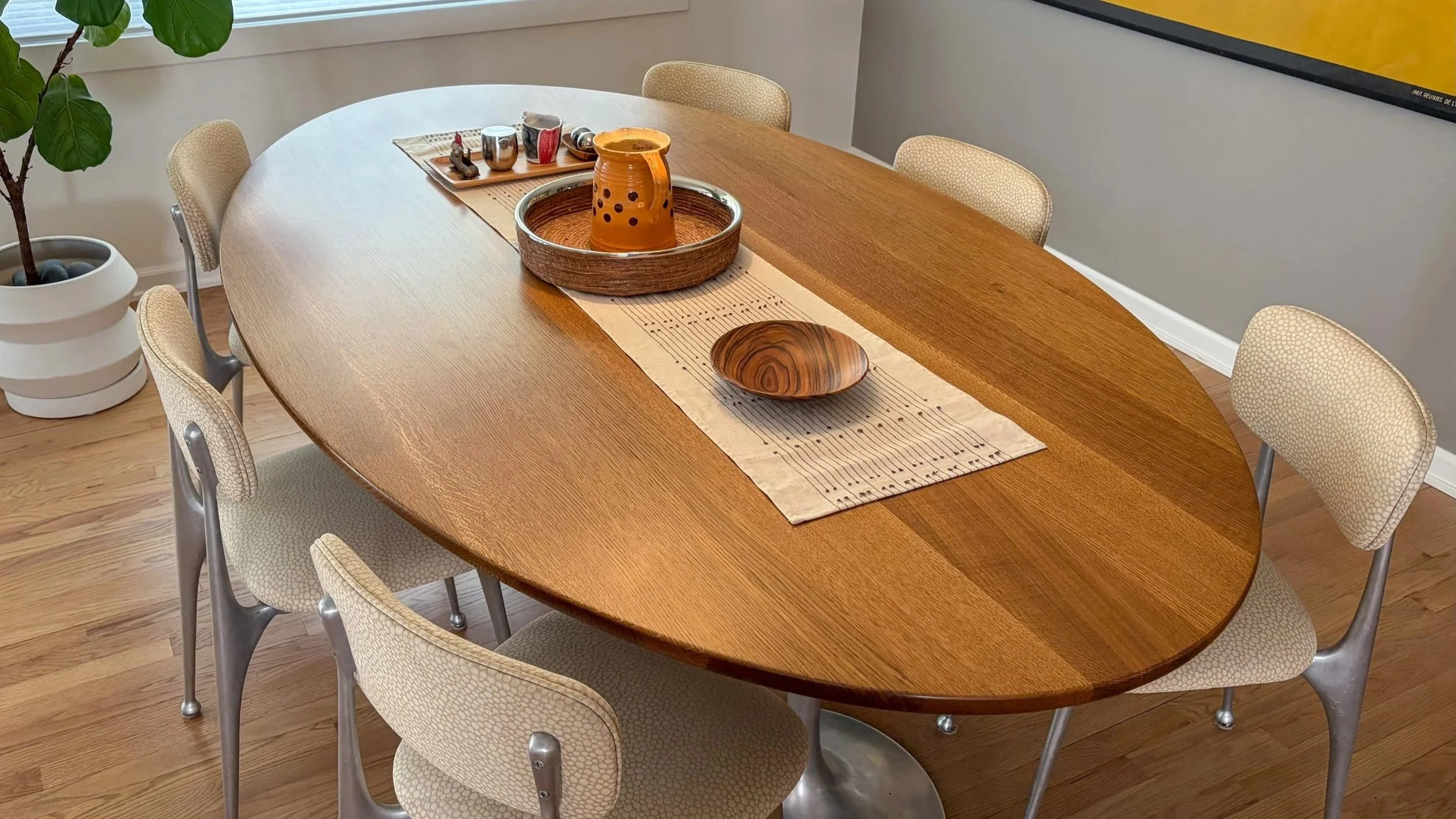
A dining table might be a traditional rectangle built for large family gatherings, a round table designed to encourage conversation, or an oval table that creates a softer, more inviting presence in a room.
The goal is not simply to build furniture that fits your space. The goal is to build furniture that belongs there.
2. Curating Materials With Purpose
Once the vision is clear, the material selection begins. The wood species, grain patterns, and natural characteristics all contribute to the personality of the finished piece.
A modern space may call for the clean, consistent lines of Rift Sawn White Oak. Its straight grain and lighter tones create a refined, contemporary feel.
A more traditional space may be better suited for Walnut, with its rich brown tones and natural color variation that create warmth and depth.
Quarter Sawn White Oak can bring a craftsman-inspired character through its distinctive medullary rays, while a live edge slab can create a truly one-of-a-kind statement piece that celebrates the natural shape of the tree.
Species such as Cherry, Maple, and Elm each bring their own unique characteristics and can create a different relationship between the furniture and the space where it lives.
The right material is the material that best tells the story of the piece.
3. Composing the Natural Beauty of the Wood
Selecting great lumber is only the beginning.
Every board has a better side. Some have more interesting grain, fewer imperfections, stronger color variation, or unique features worth highlighting.
Before a single cut is made, I carefully arrange each board to create balance and harmony within the finished piece.
I consider:
Grain direction and how light will move across the surface.
How figured grain will create chatoyance, the shimmering, three-dimensional effect that changes as you move around the piece.
Color variation between boards.
Where unique grain patterns or natural features should be positioned.
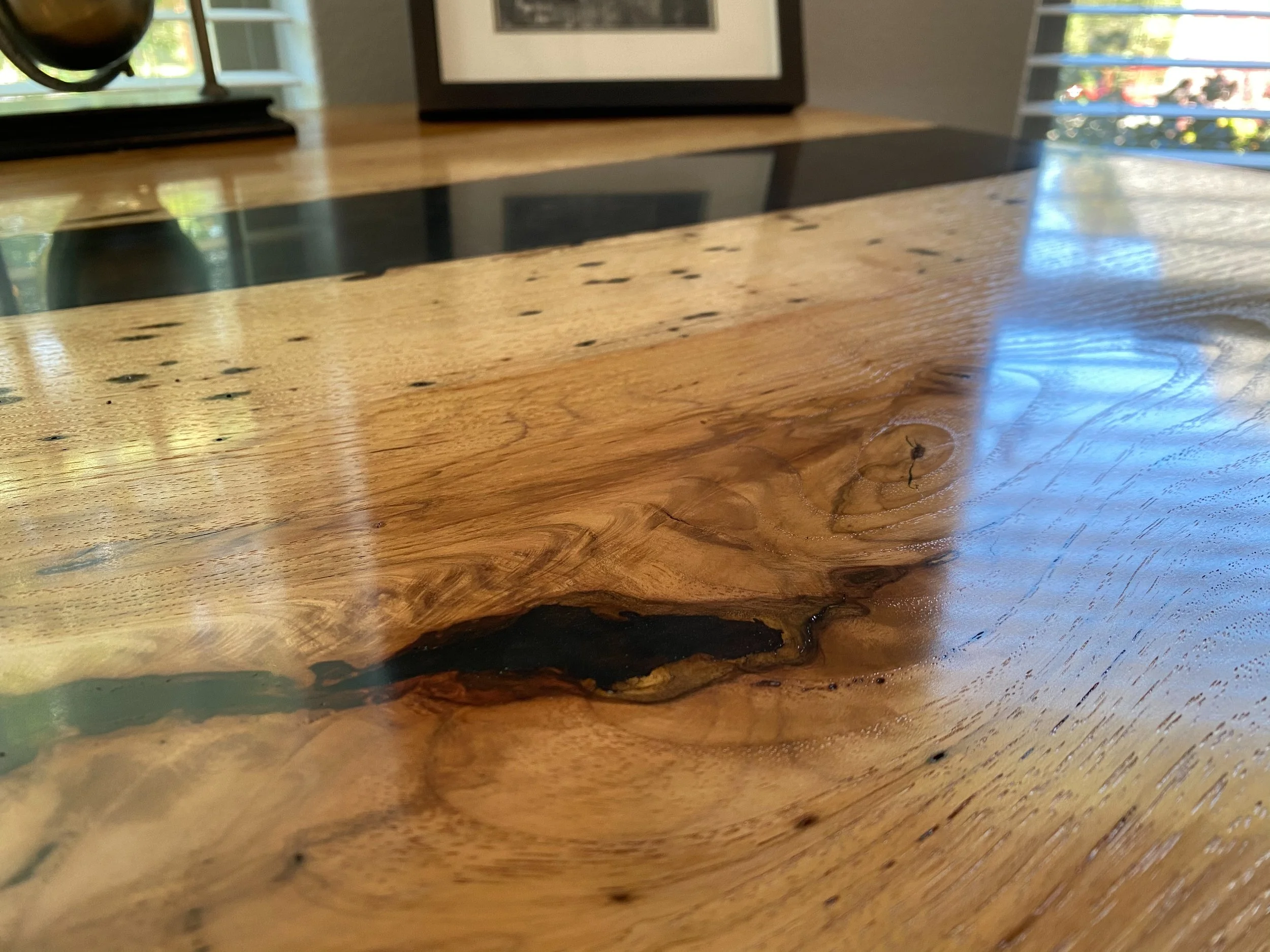
Sometimes the wood itself influences the design. For one custom table, we adjusted the overall length of the piece so we could incorporate live edge sections with black epoxy accents into the corners. Rather than forcing the material into a predetermined design, we allowed the natural character of the wood to become part of the design.
The goal is not to hide variation. The goal is to celebrate it.
4. Crafting With Intention
Once the materials are selected and composed, craftsmanship brings the design to life.
Joinery is not just about making a piece strong. It is another opportunity to celebrate the materials.
For a dining table, carefully prepared edges create seamless glue joints between boards. Biscuits may be incorporated to help with alignment and provide additional strength, while dowel joinery can be used when additional structural support is needed.
On the Powell Accent Table, the box joints connecting the top, base, and legs provide strength for the lightweight C-table design while showcasing the beauty of exposed end grain.
On the Grace Woven Leather Bench, bridal joints and traditional round mortise-and-tenon joinery provide lasting strength while creating visual details that reward closer inspection.
Every surface is carefully refined through the sanding process, progressing through multiple grits until the wood feels smooth and natural beneath your hand.
Then comes one of my favorite moments. The finish. This is when the character that was carefully selected weeks earlier finally comes alive. The grain reveals itself. The colors deepen. The figure begins to move with the light. The piece becomes more than a collection of boards. It becomes furniture.
5. Creating Something Worth Discovering
The most rewarding part of building a handcrafted piece is knowing that the customer will continue discovering it long after it leaves the shop.
I hope they notice the grain pattern that changes as they walk around the room. The shimmer of figured wood that appears from a different angle. The subtle shifts in color that make the piece unique.
I hope they feel the difference when they run their hand across the surface, the smoothness of the finish, the warmth of real wood, and the weight and presence of something built to last.
I hope they look closely at the joinery and appreciate the precision behind the details.
Most importantly, I hope they feel that they own something special. Something that was not pulled from a warehouse shelf. Something that was not designed to look the same as everything else. Something that was thoughtfully created, carefully crafted, and made specifically for their home.
That is the Vault Woodworks difference. Not just furniture. A piece with a story waiting to be lived.
The Character of Wood.
Every tree has a story written into its grain. The species, where it grew, how it was sawn, and the conditions it experienced throughout its life all influence the personality of the finished piece.
-
If there is one hardwood that has earned its reputation as a timeless furniture wood, it's Black Walnut. Prized for centuries by furniture makers and craftsmen alike, Black Walnut offers a unique combination of warmth, elegance, and natural character that few other species can match.
Its rich heartwood ranges from warm, light brown tones to deep, dark chocolate hues, often accompanied by striking variations in color and grain that make every board unique. Walnut naturally features creamy white sapwood, which can be incorporated into a design to create beautiful contrast and visual interest when desired.
One of the things I appreciate most about Black Walnut is that no two boards are ever quite the same. Some exhibit a straight, uniform grain pattern that lends itself beautifully to clean, modern designs. Others reveal curly or interlocking grain that produces a subtle shimmer when light moves across the surface. Occasionally, you'll find extraordinary figured boards featuring crotch grain, burls, waves, or dramatic color variations that simply stop you in your tracks.
Black Walnut is also incredibly stable, making it an exceptional choice for heirloom-quality furniture. Its dimensional stability means it performs well in furniture applications where long-term durability matters, from dining tables and coffee tables to benches and accent pieces that will be enjoyed for generations.
Unlike many hardwoods that darken over time, Black Walnut naturally lightens as it ages and is exposed to both natural and indoor light. This gradual change gives the wood an evolving character that many furniture enthusiasts appreciate. Rather than viewing this as a flaw, I consider it part of the story the wood continues to tell throughout its lifetime.
Why Choose Black Walnut?
Black Walnut may be the right choice for your project if you're looking for:
Rich, sophisticated color and natural warmth.
Unique grain patterns and beautiful figure.
Exceptional stability and durability.
Timeless appeal that complements both modern and traditional interiors.
A premium hardwood that develops character as it ages.
Furniture that feels substantial, heirloom-worthy, and distinctly handcrafted.
Design Styles That Pair Beautifully with Black Walnut
Mid-Century Modern
Black Walnut has long been associated with Mid-Century Modern furniture for good reason. Its rich tones and organic grain patterns complement clean lines, tapered profiles, and minimalist forms while allowing the natural beauty of the wood to become the focal point of the design.
Modern and Contemporary
Walnut excels in modern interiors by adding warmth and depth to spaces that feature matte black accents, metal details, stone, or concrete. Its natural beauty softens more architectural elements and brings an inviting warmth to contemporary spaces.
Transitional and Traditional
For transitional and traditional interiors, Black Walnut offers a sense of timeless sophistication. Its rich coloring and heirloom-quality appearance pair beautifully with warm neutrals, classic architectural details, and thoughtfully layered spaces.
The Vault Woodworks Perspective
When I select Black Walnut for a project, I'm not simply choosing a wood species—I'm choosing the personality of the piece.
Some Walnut boards are understated and elegant. Others are bold and dramatic. The most exciting boards are often the ones that reveal something unexpected: a shimmering grain pattern, a subtle color shift, or a figure that catches the light in a way that makes you stop and take a second look.
Black Walnut is a wood that rewards close inspection. It invites you to run your hand across its surface, admire the movement in the grain, and appreciate the fact that nature never creates the same board twice.
If you're looking for a wood that combines timeless beauty, remarkable character, and heirloom-quality durability, Black Walnut remains one of my favorite choices for fine furniture—and for good reason.
-
White Oak has become one of the most sought-after hardwoods in modern furniture design and for good reason. Its timeless beauty, exceptional durability, and remarkable versatility allow it to feel equally at home in a Scandinavian-inspired space, a modern farmhouse dining room, or a contemporary minimalist interior.
As a North American hardwood, White Oak is prized for its strength, stability, and natural resistance to wear. Its color ranges from light to medium brown heartwood with pale brown or creamy white sapwood, often featuring subtle olive and gray undertones that gently mature into a warm, golden hue over time. Unlike Black Walnut, which lightens with age, White Oak develops a richer patina as it is exposed to both natural and indoor light, becoming even more beautiful as the years pass.
One of the characteristics I appreciate most about White Oak is that it can take on entirely different personalities depending on how it is sawn. The same tree can produce dramatically different appearances, making White Oak one of the most versatile species available for fine furniture.
The Character of White Oak
White Oak typically features a straight grain pattern with a slightly coarser texture than Walnut or Cherry. It offers an organic warmth that feels sophisticated without demanding attention. While subtle at first glance, White Oak reveals its beauty through texture, grain, and the way it interacts with light.
The method in which the lumber is sawn plays a significant role in its final appearance.
Rift Sawn White Oak
Rift Sawn White Oak offers some of the cleanest and most consistent grain patterns available in hardwood furniture. Its straight, linear grain creates a refined, architectural feel that complements contemporary interiors beautifully.
If you're drawn to clean lines and understated elegance, Rift Sawn White Oak is often an exceptional choice.
Perfect for:
Modern and contemporary interiors.
Scandinavian-inspired spaces.
Minimalist furniture designs.
Customers who appreciate subtle sophistication.
Quarter Sawn White Oak
Quarter Sawn White Oak is perhaps best known for its striking medullary rays—often referred to as ray fleck or flake patterns. These decorative markings are a naturally occurring feature of the wood and have been celebrated in fine furniture for generations.
Quarter sawn material has long been associated with Craftsman-style furniture and architecture, offering a timeless character that feels both traditional and refined. Depending on the board, these ray flecks can be subtle or dramatic, adding visual depth and movement across the surface of the furniture.
Perfect for:
Craftsman-style furniture.
Traditional and transitional interiors.
Heirloom-quality statement pieces.
Customers who appreciate the natural artistry of the wood.
Plain Sawn White Oak
Plain Sawn White Oak provides a more organic and traditional grain pattern featuring the familiar cathedral grain that many people associate with solid hardwood furniture.
Its greater variation in grain and movement creates a softer, more natural appearance that feels warm and inviting without being overly formal.
Perfect for:
Modern farmhouse interiors.
Transitional spaces.
Rustic contemporary designs.
Customers who enjoy a more natural and varied wood appearance.
Why Choose White Oak?
White Oak may be the right choice for your project if you're looking for:
Exceptional strength and durability.
A hardwood that develops a beautiful golden patina over time.
Clean, versatile aesthetics that complement a variety of design styles.
A lighter-colored wood that brings warmth and brightness to a space.
Multiple grain and sawing options that dramatically influence its appearance.
Timeless appeal that feels equally modern and traditional.
Design Styles That Pair Beautifully with White Oak
Scandinavian
White Oak's light tones and subtle grain create the bright, clean warmth that Scandinavian interiors are known for. Paired with soft whites, warm grays, and natural textiles, it creates a calming and inviting atmosphere.
Japandi
Combining Japanese functional minimalism with Nordic comfort, Japandi design celebrates natural materials and thoughtful simplicity. White Oak feels perfectly at home in these spaces, bringing balance, warmth, and understated beauty.
Modern Farmhouse
White Oak's organic character pairs beautifully with stone, wrought iron, neutral leather, and soft natural finishes. Its versatility allows it to feel both refined and approachable in modern farmhouse interiors.
Minimalist and Transitional
For customers who appreciate simplicity and clean design, White Oak offers texture and warmth without overwhelming a space. Its subtle grain softens stark architectural lines and creates a timeless foundation that evolves gracefully with changing décor.
The Vault Woodworks Perspective
White Oak is often described as subtle and that's precisely what makes it so beautiful.
It isn't always the wood species that immediately demands your attention when you walk into a room. Instead, it's the one that quietly reveals itself over time. The warmth of its color, the texture of its grain, and the beautiful ray flecks found in quarter sawn boards invite you to take a closer look.
White Oak has a way of making a room feel calm and grounded. It pairs beautifully with both traditional and modern design styles and offers an understated elegance that never feels trendy or dated.
For me, White Oak represents balance. It can be clean and contemporary, rich and traditional, or warm and organic—all depending on how it's selected and thoughtfully incorporated into the design.
If you're looking for a hardwood that is incredibly versatile, exceptionally durable, and timeless in its beauty, White Oak is one of the finest choices you can make for heirloom-quality furniture.
-
Maple has a quiet confidence about it. At first glance, it can appear clean, simple, and understated. But look a little closer and you'll discover why it has been prized by furniture makers, musical instrument builders, and craftsmen for centuries.
Dense, durable, and exceptionally hard, Maple is one of North America's most versatile hardwoods. Its creamy off-white sapwood is what most people immediately recognize, often accented by subtle reddish or golden undertones. The heartwood is darker, ranging from light reddish-brown to warm amber hues that provide beautiful contrast within the same board.
While Maple is often chosen for its light and contemporary appearance, some of its most remarkable qualities remain hidden until the right board reveals itself. Highly figured Maple can exhibit some of the most spectacular grain patterns found in any hardwood, transforming an otherwise simple piece of furniture into something truly extraordinary.
One of the things I appreciate most about Maple is its ability to feel both modern and timeless at the same time. It has a brightness that can open up a space while still providing the warmth and character that only real hardwood can offer.
The Character of Maple
Maple is naturally dense and durable, making it an excellent choice for furniture that is meant to withstand everyday use. Its tight, fine grain creates a smooth surface that finishes beautifully and lends itself well to both contemporary and traditional designs.
While many Maple boards exhibit a straight, uniform grain pattern, the species is also known for producing some of the most sought-after figured lumber available.
Bird's-Eye Maple
Bird's-Eye Maple features small swirling "eyes" scattered throughout the wood, creating a unique visual texture unlike any other hardwood. No one knows exactly why these markings occur in nature, which only adds to their charm and rarity.
The result is a subtle but captivating surface that rewards closer inspection and becomes more interesting the longer you live with it.
Curly Maple
Curly Maple is one of my personal favorites because of the incredible chatoyance it can exhibit. As light moves across the surface, the grain appears to shimmer and shift, creating a beautiful three-dimensional effect that changes depending on where you're standing.
It's one of those woods that almost asks you to walk around it and admire it from every angle.
Quilted Maple
Quilted Maple displays dramatic, rolling grain patterns that resemble ripples or waves across the surface of the board. Its movement and depth can create a truly luxurious appearance that feels more like nature's artwork than lumber.
Spalted Maple
Spalting occurs naturally as fungi begin creating dark lines and unique coloration within the wood. Spalted Maple offers some of the most organic and artistic patterns found in hardwood furniture.
No two boards are ever alike.
Why Choose Maple?
Maple may be the right choice for your project if you're looking for:
A light-colored hardwood that brightens a space.
Exceptional durability and hardness.
Clean, contemporary aesthetics.
Highly figured grain patterns that create extraordinary visual interest.
A smooth, refined surface that feels wonderful to the touch.
A versatile hardwood that works beautifully across many design styles.
Design Styles That Pair Beautifully with Maple
Scandinavian
Maple's light tones and subtle grain patterns make it a natural fit for Scandinavian interiors. Its simplicity complements bright spaces, natural textiles, and uncluttered design philosophies while adding warmth without visual heaviness.
Modern Minimalist
The clean lines and fine grain of Maple allow the furniture's form and craftsmanship to take center stage. A clear finish preserves the natural beauty of the wood while emphasizing its architectural simplicity.
Contemporary Farmhouse
Maple offers the perfect balance of durability and warmth for contemporary farmhouse interiors. Its lighter appearance feels approachable and practical while remaining refined enough for more sophisticated spaces.
Traditional and Transitional
Maple can easily bridge traditional and modern aesthetics. Whether left natural or finished to bring out its warmer tones, it creates furniture that feels timeless without becoming overly formal or heavy.
The Vault Woodworks Perspective
Maple is a wood that often surprises people.
Many customers initially choose Maple because they want a lighter-colored hardwood that complements their home. What they don't always expect is how much character the right board can possess.
Highly figured Maple can exhibit some of the most beautiful chatoyance found in hardwood furniture. As the light moves across its surface, the grain seems to come alive. It invites you to stop, walk around the piece, and appreciate the subtle movement that nature created long before it ever arrived in my shop.
Maple also has a wonderful tactile quality. Its fine grain and density allow it to be sanded to an incredibly smooth, silky surface that feels just as beautiful as it looks.
For me, Maple represents understated elegance. It can quietly complement a minimalist interior or become the centerpiece of a room when an exceptional figured board is allowed to shine.
If you're looking for a hardwood that combines durability, versatility, and the potential for remarkable natural beauty, Maple is an exceptional choice for heirloom-quality furniture that will be enjoyed for generations.
-
Few hardwoods tell the story of time quite like Cherry.
While many people fall in love with Cherry for its warm color and smooth, refined grain, one of its most remarkable characteristics is that it doesn't remain the same wood you bring home on day one. Cherry is constantly evolving. Exposure to both natural and indoor light causes it to develop a rich patina over time, transforming from its fresh, golden-pink beginnings into the deep, reddish-brown tones that have made it one of the most celebrated furniture woods in history.
In many ways, Cherry rewards patience. What begins as a beautiful piece of furniture slowly matures into something even richer and more elegant with every passing year.
Cherry has been a favorite among fine furniture makers for centuries because of its warmth, workability, and timeless appearance. It feels equally at home in an heirloom dining table passed down through generations as it does in a modern, minimalist interior looking for a touch of natural warmth.
The Character of Cherry
Freshly milled Cherry typically displays light pinkish-brown or golden hues in its heartwood, while the sapwood ranges from creamy white to pale yellow. Unlike many hardwoods, Cherry undergoes one of the most dramatic and beautiful color transformations found in fine furniture.
During its first year, Cherry can darken noticeably as it is exposed to oxygen and light. Over time, it develops a warm, deep reddish-brown patina that furniture enthusiasts have admired for generations.
The grain of Cherry is generally straight, fine, and uniform, creating a smooth and sophisticated appearance. Occasionally, you'll find subtle waves, curly grain patterns, or distinctive natural features such as small pin knots and brown pitch flecks that add character without overwhelming the design.
Cherry's understated elegance allows it to complement both traditional and contemporary spaces with equal grace.
The Beauty of Aging Gracefully
Perhaps my favorite characteristic of Cherry is its willingness to embrace time.
Unlike materials that are designed to look exactly the same year after year, Cherry evolves. Sunlight streaming through your dining room window, the changing seasons, and the memories created around the piece all become part of its story.
That gradual darkening isn't something to avoid—it's something to celebrate.
The Cherry dining table that leaves my shop today will look slightly different a year from now and even more beautiful ten years from now. Its patina becomes a visual reminder that handcrafted furniture is meant to be lived with, not simply admired from across the room.
Why Choose Cherry?
Cherry may be the right choice for your project if you're looking for:
A hardwood that becomes more beautiful with age.
Warm, rich reddish tones that complement a wide variety of interiors.
A smooth, fine grain that creates an elegant appearance.
Furniture that develops a distinctive natural patina over time.
Timeless character that never feels trendy or dated.
An heirloom-quality hardwood with a long history in fine furniture making.
Design Styles That Pair Beautifully with Cherry
Traditional
Cherry has been synonymous with traditional fine furniture for generations. Its rich coloring and elegant grain patterns bring warmth and sophistication to formal dining rooms, studies, and heritage-inspired spaces.
Rustic and Farmhouse
Cherry's natural warmth pairs beautifully with exposed wood beams, stone fireplaces, neutral linens, and casual gathering spaces. Its ability to add depth and richness makes it an excellent choice for rustic and farmhouse interiors seeking a refined touch.
Mid-Century Modern
Cherry offers an understated elegance that complements the clean lines and organic forms of Mid-Century Modern design. Its rich tones provide warmth without overwhelming minimalist spaces.
Contemporary
Modern interiors often benefit from introducing natural materials that soften architectural lines. Cherry's evolving character creates warmth and visual interest while maintaining a clean and timeless aesthetic.
The Vault Woodworks Perspective
Cherry is a wood that teaches us to appreciate change.
So much of today's furniture is designed to resist aging or disguise it altogether. Cherry does the opposite. It proudly displays the passage of time, becoming richer, deeper, and more beautiful as the years go by.
I love that a Cherry piece doesn't simply maintain its appearance, it develops one.
The dining table where your children completed their homework, the coffee table where friends gathered for conversation, or the bench that welcomed guests into your home will all continue to evolve alongside the memories created around them.
Cherry isn't a wood that stays frozen in time. It grows with you.
If you're looking for a hardwood that offers timeless elegance, exceptional warmth, and a beautiful aging process that reflects a life well lived, Cherry remains one of the finest choices for heirloom-quality furniture.
Much like the stories created around it, Cherry only gets better with time.
-
Red Oak
Pecan / Hickory
Elm
Sycamore
Alder
Vegetable-Tanned Leather
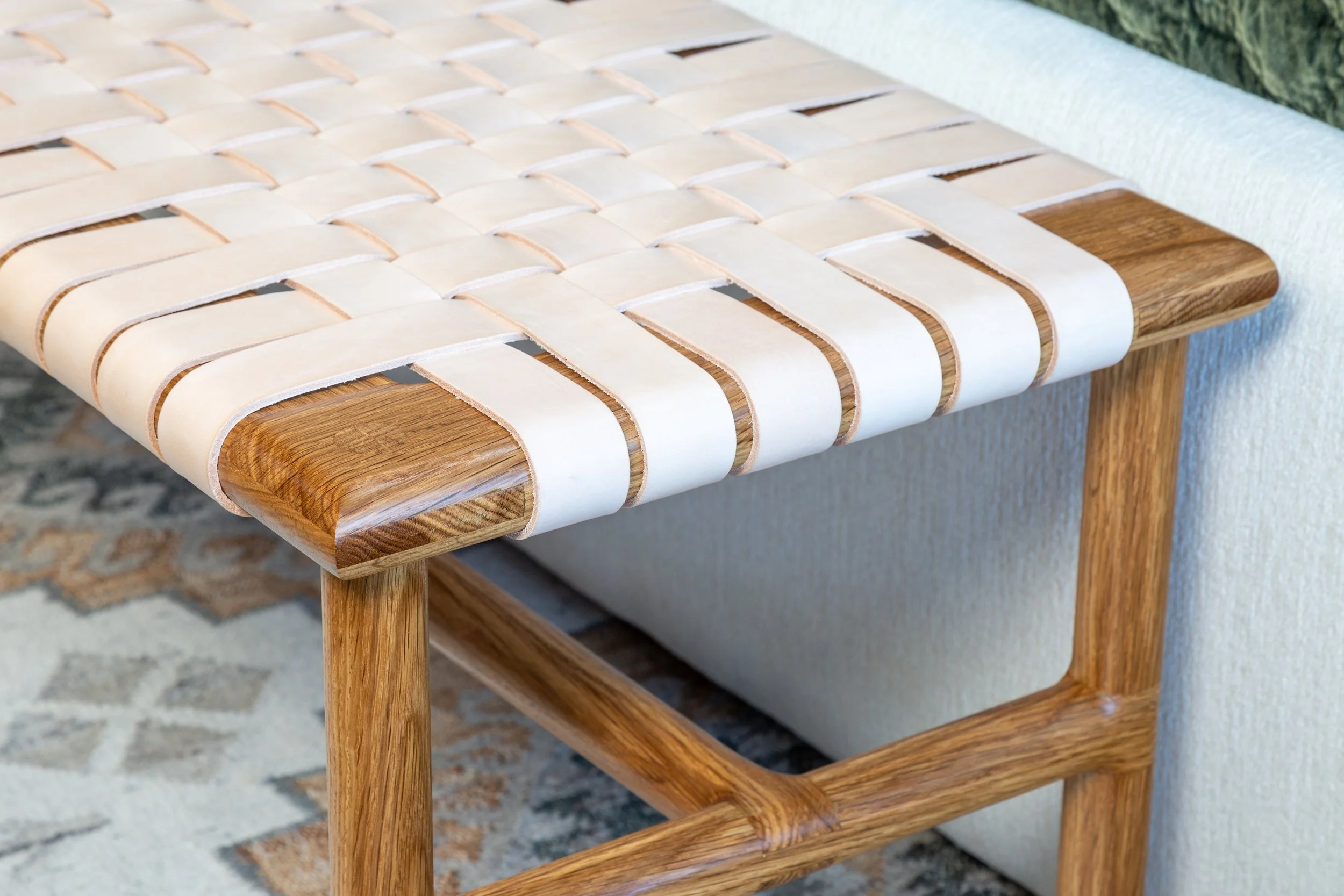
Like solid hardwood, vegetable-tanned leather is a natural material that continues to evolve throughout its lifetime. Every touch, every ray of sunlight, and every year of everyday use gradually transforms its appearance, creating a rich patina that is completely unique to the people who live with it.
-
Vegetable-tanned leather is one of the oldest and most respected methods of leather making, dating back thousands of years. Rather than using modern chromium salts to speed the tanning process, vegetable tanning relies on natural tannins extracted from tree bark, leaves, and other plant materials.
The process takes considerably longer than chrome tanning, but the result is a leather that feels authentic, ages beautifully, and develops a depth of character that simply cannot be replicated by synthetic materials or heavily processed leathers.
-
When designing the Grace Woven Leather Bench, I wanted a material that shared the same philosophy as the hardwood beneath it. Neither material stays exactly the same. Black Walnut gradually softens in color. White Oak and Cherry develop deeper, richer patinas. Vegetable-tanned leather darkens, softens, and develops its own distinctive character through years of use.
Rather than hiding wear, vegetable-tanned leather celebrates it. The natural oils from your hands, exposure to sunlight, and the routines of everyday life gradually soften the leather while deepening its color and enriching its appearance. That makes each bench uniquely yours.
-
One of the first things many customers notice is how different vegetable-tanned leather looks after several years compared to the day it arrives.
Fresh leather often begins with lighter, natural tones and a smooth matte appearance. As time passes, the leather slowly develops a richer color, a softer feel, and a subtle sheen that can only come from years of handling and use.
Areas that are touched more frequently may darken slightly faster. Places where family members naturally sit may become more polished.
Much like a favorite leather journal, a well-worn baseball glove, or a cherished pair of leather boots, the beauty of vegetable-tanned leather comes from the memories it quietly records.
-
Vegetable-tanned leather will change over time.
The color will gradually deepen and become richer.
The leather will soften with everyday use.
A natural sheen will develop from handling.
Minor scratches and marks will blend into the overall patina.
Every woven seat will become completely unique to its owner.
None of these changes diminish the leather. They enhance it.
-
I choose vegetable-tanned leather because it becomes more beautiful with time.
Just as I carefully select hardwoods for their grain, figure, and character, I choose vegetable-tanned leather because when paired with handcrafted hardwood furniture, vegetable-tanned leather creates something that cannot be mass-produced.
It creates furniture that grows more personal every year. To me, that's exactly what heirloom furniture should do.
Choosing the Right Finish
A finish should do two things exceptionally well.
It should protect the furniture from the realities of everyday life while allowing the natural beauty of the wood to remain the star of the piece.
At Vault Woodworks, I don't believe in choosing a finish simply because it's popular. Every finish is selected with one question in mind:
How will this piece be used over the next several decades?
A dining table that hosts family dinners every evening has very different needs than an accent table, floating shelf, or decorative bench. Rather than forcing every piece into the same finishing system, I choose the finish that best matches the way you'll actually live with your furniture.
-
The finish is far more than the final step in the building process. It protects the wood from moisture, spills, everyday wear, and changing seasons while enhancing the grain, color, and character that made me choose those particular boards in the first place.
One of my favorite moments in the shop is applying that first coat. The grain begins to deepen, the figure starts to shimmer, and suddenly all of the planning that went into selecting and arranging the lumber comes to life.
-
There isn't a single finish that's perfect for every piece. Different furniture serves different purposes, and those differences deserve thoughtful consideration.
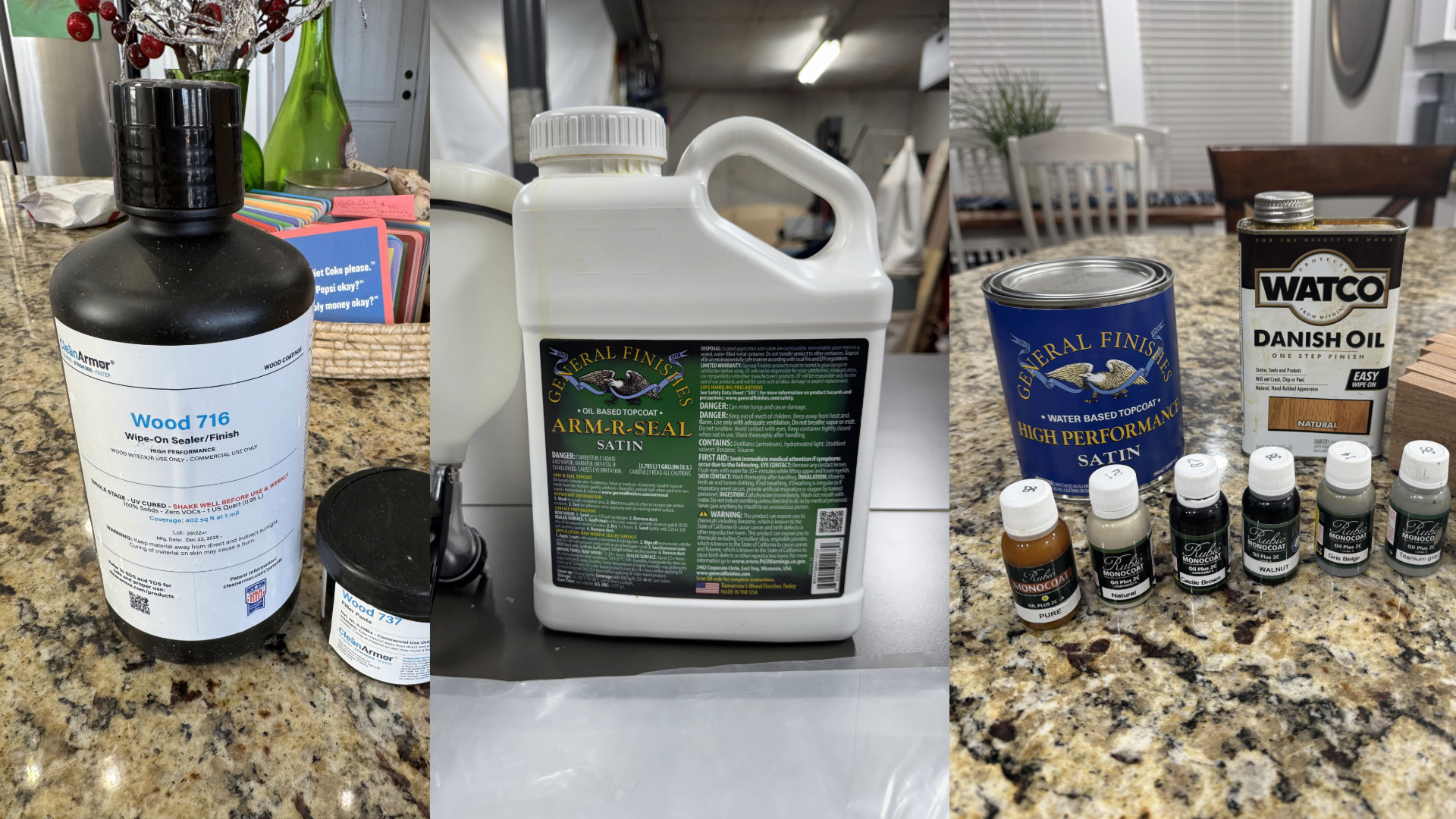
For heavily used furniture such as dining tables, desks, or coffee tables, I often recommend high-quality polyurethane or advanced polymer-based finishes. These finishes provide outstanding durability while standing up to the spills, scratches, and everyday use that naturally come with family life.
For furniture where the tactile experience of the wood is equally important and lighter-use pieces, I often choose a hardwax oil finish or a hand rubbed penetrating oil or varnish. These penetrate into the wood while leaving a beautifully natural appearance and feel. Rather than creating a coating over the surface, they allow you to experience the warmth and texture of the wood itself while still providing excellent protection for their intended use.
The goal is to choose the finish that best serves both the furniture and the people who will enjoy it.
-
Years from now, I still want you to appreciate the grain that first caught your attention. I don't want the finish to yellow, become cloudy, or obscure the natural beauty of the wood beneath it.
As Walnut gradually lightens, White Oak develops its warm golden patina, and Cherry deepens into its rich reddish-brown tones, the finish should preserve and celebrate those natural changes rather than compete with them.
-
One of the most common concerns I hear from customers is whether they'll have to be careful with their new furniture.
My answer is always the same. I build furniture for everyday life. I want you to gather around your dining table for family dinners, celebrate birthdays, work from home, help with homework, and enjoy coffee with friends without constantly worrying about damaging the finish.
The right finish gives you the confidence to simply enjoy your furniture.
-
A finish should never become the focus of the furniture. Your eye should be drawn to the warmth of the Walnut, the beautiful ray flecks in Quarter Sawn White Oak, or the shimmering figure in Curly Maple. The finish simply makes those natural qualities possible to enjoy for decades.
To me, a successful finish is one that quietly protects the piece, preserves the beauty of the materials, and allows the memories created around the furniture to become the true story.
“I build furniture for everyday life. I want you to gather around your dining table for family dinners, celebrate birthdays, work from home, help with homework, and enjoy coffee with friends without constantly worrying about damaging the finish.”
Built to Be Lived With
Every dining table, bench, coffee table, and accent piece I build is designed with the expectation that it will become part of everyday life. Family dinners. Holiday gatherings. Morning coffee. Homework at the kitchen table. Quiet conversations after everyone else has gone to bed. Those moments are the reason the furniture exists.
Use It Every Day
One of the things I tell customers most often is this: Don't be afraid to use it.
The finishes I choose are selected for the way you'll actually live. The joinery is designed to provide generations of strength. The materials were chosen because they'll continue developing character as the years pass.
Use your dining table for weeknight dinners. Let your children spread out homework and art projects. Invite friends over for coffee. Celebrate birthdays, anniversaries, and life's everyday moments.
The memories created around your furniture will always be more valuable than keeping it looking untouched.
Simple Care for Generations of Enjoyment
One of the advantages of using high-quality natural materials is that they don't require complicated maintenance.
A few simple habits will keep your furniture looking beautiful for years to come:
Dust regularly with a soft, dry microfiber cloth.
Wipe spills promptly, especially standing water or liquids which can damage finishes and leave rings.
Avoid harsh chemicals such as ammonia, bleach, or abrasives. Instead, use mild soap and water and wipe dry with a soft, dry microfiber cloth.
Avoid silicone-based furniture polishes. While they may create a temporary shine, they leave behind residues that can build over time and make future maintenance more difficult.
Coasters are a simple habit that helps protect the finish from standing moisture while allowing you to enjoy your furniture without worry.
Use trivets or hot pads for cookware coming directly from the oven or stovetop. Most furniture finishes don’t like that.
Lift rather than drag decorative objects to help prevent unnecessary scratching.
Like all solid wood furniture, your piece is happiest in a comfortable indoor environment. Avoid prolonged exposure to extremely dry or excessively humid conditions whenever possible.
Keep furniture out of direct, prolonged sunlight whenever practical to encourage even aging across the surface.
If your piece includes vegetable-tanned leather, dust occasionally, avoid harsh cleaners and simply enjoy it. The leather is designed to develop its own rich patina through everyday use.
Here for the Life of Your Furniture
One of the benefits of purchasing handcrafted furniture is knowing the person who built it. If you ever have questions about caring for your furniture, need advice after years of use, or simply want guidance on keeping it looking its best, I'm always happy to help. And I stand behind it long after it becomes part of your home.
Crafted for Life. Built for Stories.